Explora I and II are sisters. Same 63,900 gross tons, same 248-metre hull, same 461 oceanfront suites, same roughly 922 guests at full capacity. Explora III and IV are not just the newer ships in the family; they are a revised, larger design. Explora Journeys’ own announcement says the pair were enlarged by 19 metres to fit a new propulsion system, and third-party ship registries put Explora III near 72,800 gross tons, up roughly 8,900 tons on the first pair, with 463 suites. So the headline change across the fleet is real and it is twofold: a bigger hull burning liquefied natural gas, and a handful of new rooms. If you are choosing among the ships, that is the decision.
So which one should you book? If your dates land on Explora I or II, you are on a proven, excellent ship and you are not missing much that changes the trip. If you are drawn to III or IV, you get a measurably larger, cleaner-burning vessel with more public space, a wine bar, and a chef’s table, but not a different class of experience. One boundary on this post, stated plainly. I have sailed Explora I, with my family, across more than one voyage. I have not sailed II, III, or IV. Explora I: first-hand. II, III, IV: documentary, read off Explora’s own press, the shipyard, and the launch coverage now that Explora III is in service. The rest is my read as someone who runs hospitality and has spent a life on the water. I keep those separate on purpose, because I am not going to dress a spec sheet up as a sail-aboard.
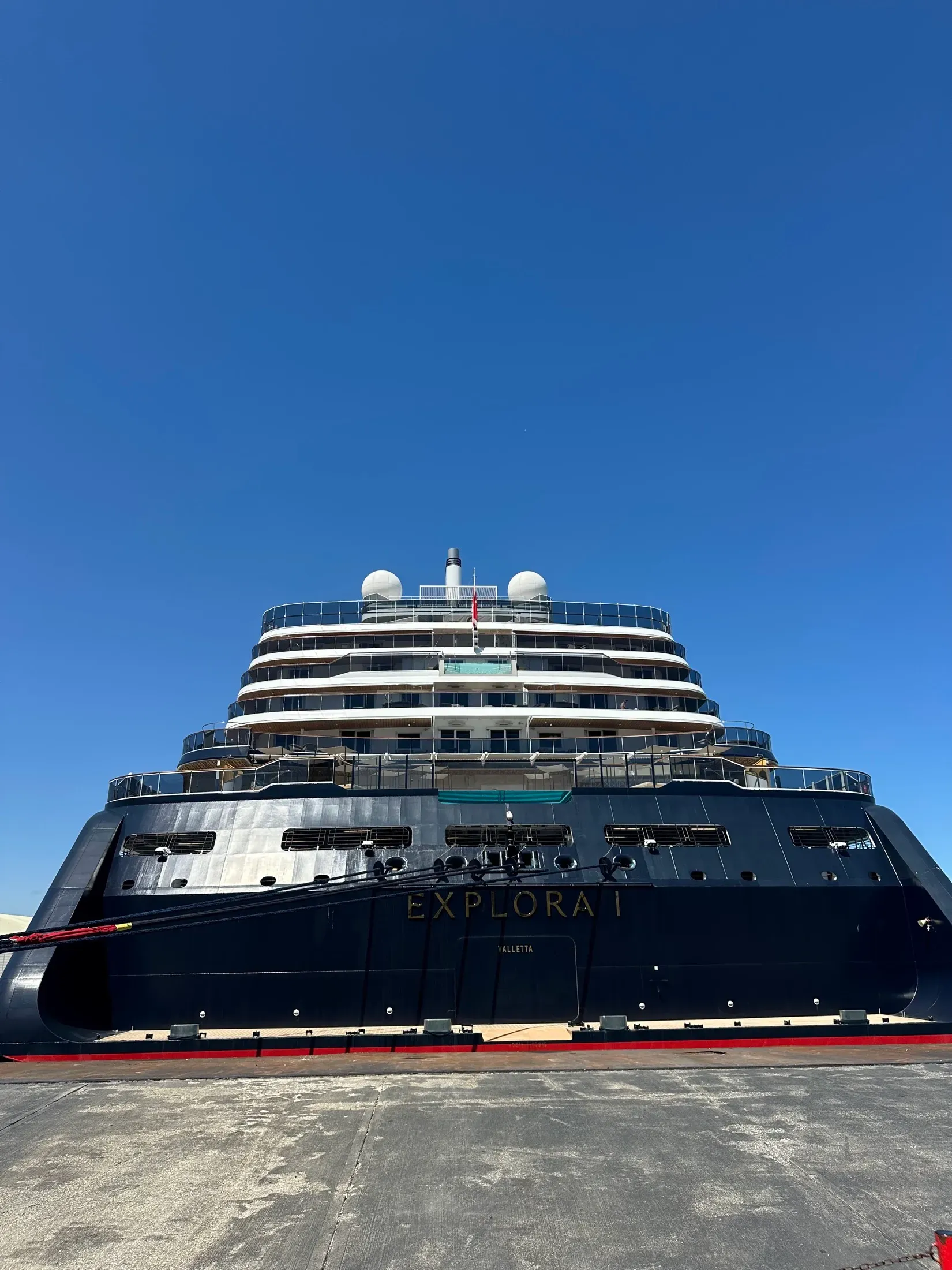
Are Explora I and II really the same ship?
For practical purposes, yes. Explora reports both at 63,900 gross tons, 248 metres length, a beam around 32 metres, 14 decks, and 461 suites, every one of them oceanfront with a terrace. Explora I entered service in August 2023 and Explora II in September 2024, both built by Fincantieri in Italy. Capacity tops out around 922 guests, with a guest-to-Host ratio Explora lists at 1.25 to 1. You can see the spec lines side by side on the ship comparison (/ships/compare/).
“Gross tonnage,” if the term is new to you, is not weight. It is a measure of a ship’s enclosed interior volume, the standard yardstick for comparing ship size. So when two ships share the same gross tonnage and the same length, they are the same hull doing the same job. The differences between Explora I and II come down to itinerary, godmother, and the small drift any two sister ships develop in service, not to the vessels themselves.
What I can tell you first-hand is how that hull behaves once you are living on it. On Explora I the all-suite, all-oceanfront layout means there is no inside-cabin tier to upsell you out of, the entry suite runs 377 square feet with a real terrace, and the ship carries its guests without ever feeling like a crowd. That is a function of the design, and it is identical on Explora II. The one thing worth knowing is that these are among the largest ships in the luxury tier, so this is more ship and less yacht-like intimacy than a small-ship line. That trade carries across every hull in the fleet, and it gets slightly more pronounced, not less, on III and IV.
Is Explora III bigger than I and II?
Yes. The marketing leads with the new venues, not the hull, so here is the size story plainly. Explora Journeys’ own press release on the hydrogen-powered ships states that Explora III and IV “will be enlarged by 19 metres to enable the installation of a new generation system based on LNG and hydrogen.” That is the line straight from the brand. Independent ship registries then put the result at roughly 72,800 gross tons for Explora III, against 63,900 for I and II, an increase of about 8,900 tons. Suite count ticks up to 463 from 461.
On length, the 19-metre enlargement puts Explora III near 268 metres, up from the 248 the first pair carry. Some legacy listings still show the original 248-metre figure, a carry-over of the I and II spec, so you will see both in the wild, but 268 is the one that squares with Explora’s own enlargement number. The honest takeaway is simple: III and IV are genuinely larger ships, and the extra volume went mostly into public space and propulsion rather than packing in more guests, which is the better use of it. If the exact delivered dimensions matter to your decision, ask me to confirm them before you book.
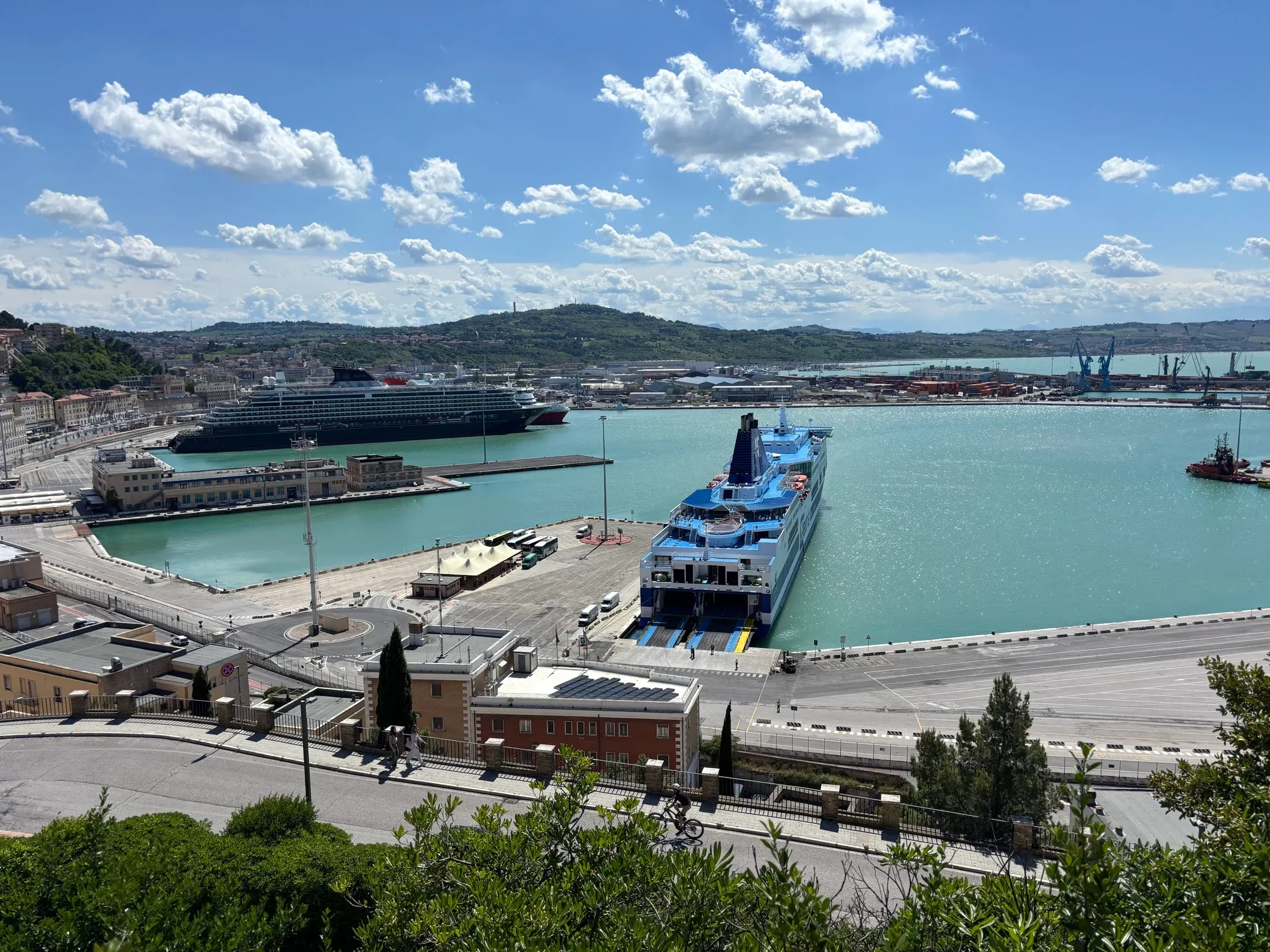
My read, as someone who reads ship specs for a living: a bigger hull at a similar guest count means more room per person, more deck terrace, more lounge. That is a quiet upgrade, the kind you feel as elbow room rather than a feature you book for.
What did LNG propulsion actually change?
This is the genuine engineering story of the fleet, and it is worth getting precise, because “green” claims at sea get inflated constantly.
Explora III is the first LNG-powered ship in the fleet. Explora I and II run on conventional marine fuel. LNG, liquefied natural gas, is natural gas chilled to a liquid so a ship can carry enough of it; burned for propulsion, it produces far less sulfur, far less particulate matter, and lower carbon than the heavy fuel a conventional ship uses. Explora III is also built to run on bio-LNG and synthetic LNG once those fuels reach commercial scale, and the later ships go further: Explora V and VI add a liquid-hydrogen containment system and fuel cells that can convert LNG into hydrogen, which Explora says will let them run at zero emissions in port with the engines off.
Here are the numbers as Explora and MSC publish them for their LNG ships, no more. Versus heavy fuel oil, LNG cuts sulfur oxides by close to 100 percent and nitrogen oxides by up to 85 percent, and it lowers carbon and particulate output as well. Explora’s larger “well-to-wake” greenhouse-gas claim, which the brand has cited around 80 percent and higher, depends on running renewable bio-LNG or synthetic LNG, not the conventional LNG a ship will mostly burn on day one. So the big figure is a future-fuel figure, and I would not book Explora III as a carbon-neutral choice. I would book it knowing it is a measurably cleaner ship than her sisters on the pollutants that matter most in port, which is exactly what Explora and MSC claim, no more.
As a practical matter for you as a guest, the propulsion is invisible. You will not feel LNG underfoot any differently than conventional fuel. The reason it belongs in a “which ship” decision is narrow: if lower-emissions operation genuinely factors into your choice, III is the ship, and V and VI more so. Otherwise it is a footnote, and the new rooms matter more.
What new venues do Explora III and IV add?
Here is where III and IV give you something the first pair cannot. Three venues are new to Explora III and IV:
The Chef’s Table is a small, immersive dining room built around live preparation, aimed at a celebration or a group that wants a one-off evening. The Cellar is a wine bar with a deep list spanning established and emerging regions. Shore Club on 11, beside the Conservatory Pool, is a relaxed all-day Mediterranean poolside spot doing made-to-order plates. There is also a new outdoor cigar lounge for rare whiskies and spirits in the open air.
The core restaurant lineup carries over from Explora I and II, so the rooms I ate in are still there. Explora lists the same core count, with The Cellar, Shore Club, and The Chef’s Table added as extra dining and beverage spaces rather than a reinvention of the menu. So the dining identity is continuous, with additions on top.

First-hand, on Explora I, the dining is the strongest thing about the ship. U.S. News ranked Explora No. 2 for Dining among cruise lines in 2026, and that tracked with what I ate. I went to Sakura, the Japanese venue, three times in a week, and the teriyaki was good enough to plan an evening around. That room is on III and IV unchanged. So my honest read on the new venues: The Cellar is the one I would actually seek out, because a tightly run wine bar with real depth is rare at sea. The Chef’s Table is a nice-to-have for a special night, not a reason to choose the ship. I have not eaten in any of the three, so that is judgment from the concept and from how Explora runs its existing rooms, not a review.
Did the kids program really change on III and IV?
Yes, and this is the clearest family-relevant difference in the fleet. On Explora I and II the Nautilus Club is a single, well-appointed space: think a really good home game room with PlayStation 5, PlayStation VR2, Xbox, Nintendo Switch, iPads, and Oculus, open daily from 9am to midnight for ages 6 to 17, with supervised time slots for ages 3 to 5 accompanied by a guardian. On Explora III the club is split into two: a Nautilus Club Juniors for ages 3 to 5 and a Nautilus Club Teens for ages 6 to 17, each with its own space.

I saw the Explora I version first-hand. Children were aboard my sailing, including babies, so it is not adults-only, but the program is small by design. For a few young ones inside an otherwise adult, multi-generational group, it worked very well. The split spaces on III would help if you are traveling with both a toddler and a teenager, who want very different things from a kids’ club and do not want to share a room to get them. What does not change across the fleet is the bigger picture: this is a luxury line built around adults, with a calm after-dinner rhythm and no waterslides. If the trip is built around the kids, a mass-market line with a full youth program is the better tool, and I will say so. The full family read is its own post (/journal/explora-journeys-with-kids/).
So which Explora ship should you pick?
Lead with the itinerary, not the hull. The ships are close enough that the right voyage on the “wrong” ship beats a compromise itinerary on your preferred one. With that said, here is how I would break the tie.
Pick Explora I or II if your dates and ports line up, you want a proven ship with service muscle memory behind it, or you simply find the better-priced voyage there. You give up the new venues and a bit of extra public space, nothing more. Pick Explora III or IV if you want the newest and largest ship, the LNG propulsion genuinely matters to you, you would use The Cellar or The Chef’s Table, or you are traveling with both small children and teens who would benefit from the split Nautilus spaces. The one catch I would actually flag with a brand-new ship: a vessel in her first season is still finding her service rhythm, and that maturing-in-front-of-you quality is more pronounced the newer the hull. Explora I, two years in, has worked seams out that a debut ship has not yet.
If you want the layers underneath this, the straight verdict on the line as a whole is my full take on whether Explora is worth it (/guides/explora-journeys-review/), the Explora III launch analysis explains what changed now that she is sailing, and the spec lines sit side by side on the Explora III vs II breakdown (/ships/iii-vs-ii/). The dedicated Explora III page (/ships/explora-iii/) carries her ship details and links to current III voyages.
Questions people ask
What is the difference between Explora I, II, III and IV? Explora I and II are near-identical sisters at 63,900 gross tons, 248 metres, 461 oceanfront suites, and up to 922 guests. Explora III and IV are a revised, larger design: Explora’s own announcement says they were enlarged by 19 metres, and third-party registries put Explora III near 72,800 gross tons with 463 suites. The extra volume went mostly to public space and to LNG propulsion, plus three new venues the first pair lack: The Chef’s Table, The Cellar, and the poolside Shore Club, and a split Nautilus Club for kids.
Is Explora III bigger than Explora I and II? Yes. Explora Journeys’ own press release states III and IV were enlarged by 19 metres to fit a new LNG and hydrogen-ready propulsion system. Third-party registries list Explora III around 72,800 gross tons against 63,900 for I and II, roughly 8,900 tons more, with 463 suites versus 461. The enlargement puts the length near 268 metres, up from 248 on the first pair, though some legacy listings still carry the original figure.
Which Explora ships are LNG-powered? Explora III is the first LNG-powered ship in the fleet; Explora I and II run on conventional marine fuel. Explora describes the program as moving the fleet toward LNG, and Fincantieri builds the later ships around liquefied natural gas. Explora V and VI add a liquid-hydrogen containment system and fuel cells that can convert LNG into hydrogen for zero-emissions operation in port.
What is new on Explora III and IV that Explora I and II do not have? Three venues are new to III and IV: The Chef’s Table, an immersive private dining room; The Cellar, a wine bar spanning established and emerging regions; and Shore Club on 11, an all-day Mediterranean poolside spot at the Conservatory Pool. There is also a new outdoor cigar lounge, and the Nautilus kids’ club is split into a Juniors space and a Teens space. The core restaurant lineup carries over.
When did Explora III launch, and when does Explora IV launch? Explora III was delivered on 23 July 2026, sailed a Mediterranean Prelude Journey from 24 to 29 July, was named in Barcelona on 1 August, and departed on her maiden Barcelona-to-Lisbon voyage on 3 August 2026. Explora IV is scheduled for 2027. Explora V is also slated for 2027 and Explora VI for 2028, completing the planned six-ship fleet.
Does the new Nautilus Club make Explora III better for families? At the margin, yes. Explora III splits the Nautilus Club into a Juniors space for ages 3 to 5 and a Teens space for ages 6 to 17, where I and II run a single room with supervised slots for the youngest. The structural limits are the same across the fleet: a luxury line built around adults, with a calm after-dinner rhythm and no waterslides. For a few kids inside a larger adult group it works well; for a trip built around children, weigh it carefully against a mass-market line.
Is it worth waiting for a newer ship? Sometimes, but lead with the itinerary. The case for waiting on III or IV is specific: you want the largest, newest hull, the LNG propulsion, the new wine bar or chef’s table, or the split kids’ spaces. The case against is that a debut ship is still finding her service rhythm, where Explora I has two years of it. If your ideal voyage is on I or II, book it; the ships are close enough that the right sailing matters more than the hull number.
— Justin