The first morning, breakfast arrived on the terrace before I had worked out how to ask for it. No clipboard, no “will you be dining with us today.” A Host read that we were up and wanted to eat outside, and made it happen. I run hospitality for a living, so I notice the seams, and on Explora I the seams I expected were not there.
So, is Explora Journeys worth it? Yes, for the traveler who wants a design hotel at sea: real suite space, a generous staff ratio, eight of nine restaurants in the fare, and the lowest headline fare in the luxury tier. Weigh it carefully if you want big-ship spectacle after dinner, or your shore excursions folded into one number. I sailed Explora I with my family across more than one voyage, and the service held a hard-to-please group together better than any trip I have run. This post is the narrative verdict. The structured pros-and-cons breakdown, with my rating, lives in my full review (/guides/explora-journeys-review/).
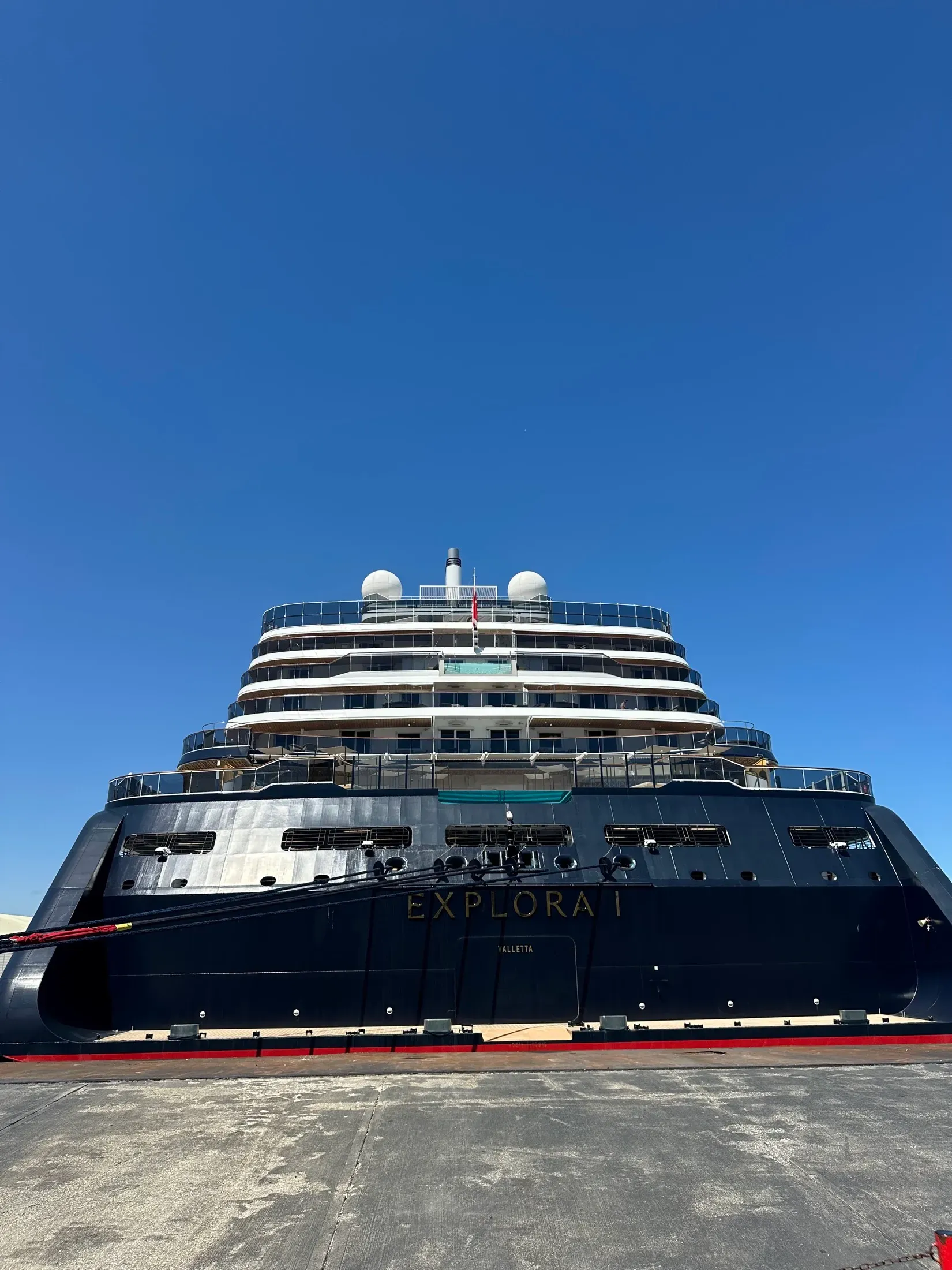
A note on who this is for. Many of my clients came to me from Aman, Four Seasons, and Belmond, having quietly written off cruising as too formal, too crowded, or too rigid for what they pay. Explora is the line that changes their minds, and it is the one I sailed and keep recommending. If you are coming from a great hotel and want the audience-specific translation, the Aman loyalists guide (/guides/explora-for-aman-loyalists/) covers what carries over and what you give up. If you are still arguing yourself out of cruising entirely, start with the case for the confirmed skeptic (/guides/explora-for-cruise-skeptics/). This piece is the verdict the rest of the Field Guide links back to.
Is it luxury, or premium dressed up?
Honest placement: premium edging toward ultra-luxury. The design, the space, and the dining clear the bar without argument. The service depth is still maturing, because the line launched in 2023 and is building muscle memory in front of you. A house that has run for thirty years has thirty years of it.
The proof is in things you can check. U.S. News ranked Explora No. 2 for Dining among cruise lines in 2026. The per-night fare on recent itineraries runs roughly $1,000 per guest, in line with Seabourn and Silversea entry pricing and above Oceania and Viking, according to independent reviewers like Tips For Travellers and Cruise Unique. So you are paying ultra-luxury-adjacent money for a product that reads as very good and remarkably consistent for how new it is. That is a different claim than flawless, and you should hear the difference before you book.
What you’re actually paying for
The structural answers get you to book. The service is what earns the fare, and it is the part a brochure cannot photograph.
What Explora has, that a lot of expensive hospitality only claims, is anticipation. It reads what you need and moves before you ask. A drink turned up before I thought to order it. When the older members of the group sat down, a Host was already there with the plates, every time, without being asked and without making it a moment.

Part of it is simple math. Explora’s crew-to-guest ratio is among the most generous in the category, roughly five crew for every four guests, so help is never more than a glance away. You are not hunting for someone or waving at a bar. You feel that ratio in the small gaps other operators leave you to fill yourself. My clearest test for a service operation is whether it holds a difficult table together. On one sailing I had three generations aboard, in-laws included, the kind of group where someone is always too hot, too tired, or quietly keeping score. The usual failure points mostly did not happen, because the Hosts caught them first. That is the closest thing to a five-star review that family gives. The full multi-generational read, kids and all, is its own piece (/guides/multi-generational-luxury-cruises/).
Where it earns the fare at the table
A good table forgives a lot, and Explora sets several. Eight of the nine restaurants are included, the steakhouse and the Japanese room among them. The No. 2 Dining ranking tracks with what I ate.
I went to Sakura, the Japanese venue, three times. The teriyaki was the standout. I am not in the business of telling you a ship’s food is transcendent, because that word gets used until it means nothing, but the teriyaki was good enough that I planned evenings around it, which is the only review that counts. The one upcharge worth knowing about is the Anthology tasting menu; everything else on the dinner roster is in the fare. For the room-by-room read on where to book and what to skip, the dining guide (/dining/) has it. The point for the verdict is narrower: this is not banquet-hall cruise food, and one meal usually settles the argument.
There is a logistics note that belongs in the value column too. Embarkation and disembarkation were genuinely fast on my sailings, the parts of cruising that usually feel like an afternoon at the DMV. You are met at the dock, handed a drink, and the boring parts happen around you. For a multi-generational group with an older relative who tires standing in a queue, that alone is worth more than it sounds.
What you give up
A verdict built on flattery does not hold, so here is the honest ledger. Each item is a question of fit more than a defect.
It is quiet after dinner. The atrium bar stays busy and the nightly shows are good for the size of the ship, but the energy winds down right around when I want to go to bed. For the hotel-luxury buyer that calm is usually the selling point. If late-night spectacle is the point of a trip for you, this is the wrong ship, and lines like Silversea and the bigger players win that round. Where Silversea wins and where Explora does (/vs/silversea/) lays out the trade honestly.
Shore excursions and air are not in the fare, which is exactly the kind of thing I tracked on my folio all week to see what actually costs extra. Some of the bundled tours are geared to a particular demographic, and there were destinations on my own sailings I would have skipped. I tend to arrange my own guides in port, partly because I plan travel for a living. AFAR documented a bus-tour-with-headsets on a stop the brand markets as anything but, so this is a real and recurring note, not a one-off. On a port-heavy itinerary the gap against lines that bundle excursions narrows, which is worth pricing out before you book.
Some venues close early, and not always predictably. The gelateria was reliably shut when I wanted it, and pool and hot-tub hours wound down sooner than I expected. It is the most “I paid for this, where is it” gripe on the ship, and it is real. Confirm a specific sailing’s venue hours before you book, because they vary.
And the structural one: these are the largest ships in the luxury tier at up to 922 guests, with one pool. That is more people and less intimacy than a small yacht. If intimacy above all is the whole point, a Ritz-Carlton or Four Seasons yacht beats it, and I book those too.

What the suite is actually like
The suite is where the hotel comparison stops being a slogan. Every one is oceanfront with a real terrace, design-led rather than the dated cruise-cabin look, finishes that read as a hotel room instead of a stateroom. There are no inside cabins to upsell you out of, which quietly removes the worst decision on most ships. The entry suite runs 377 sq ft, among the largest entry suites in the all-inclusive luxury segment.
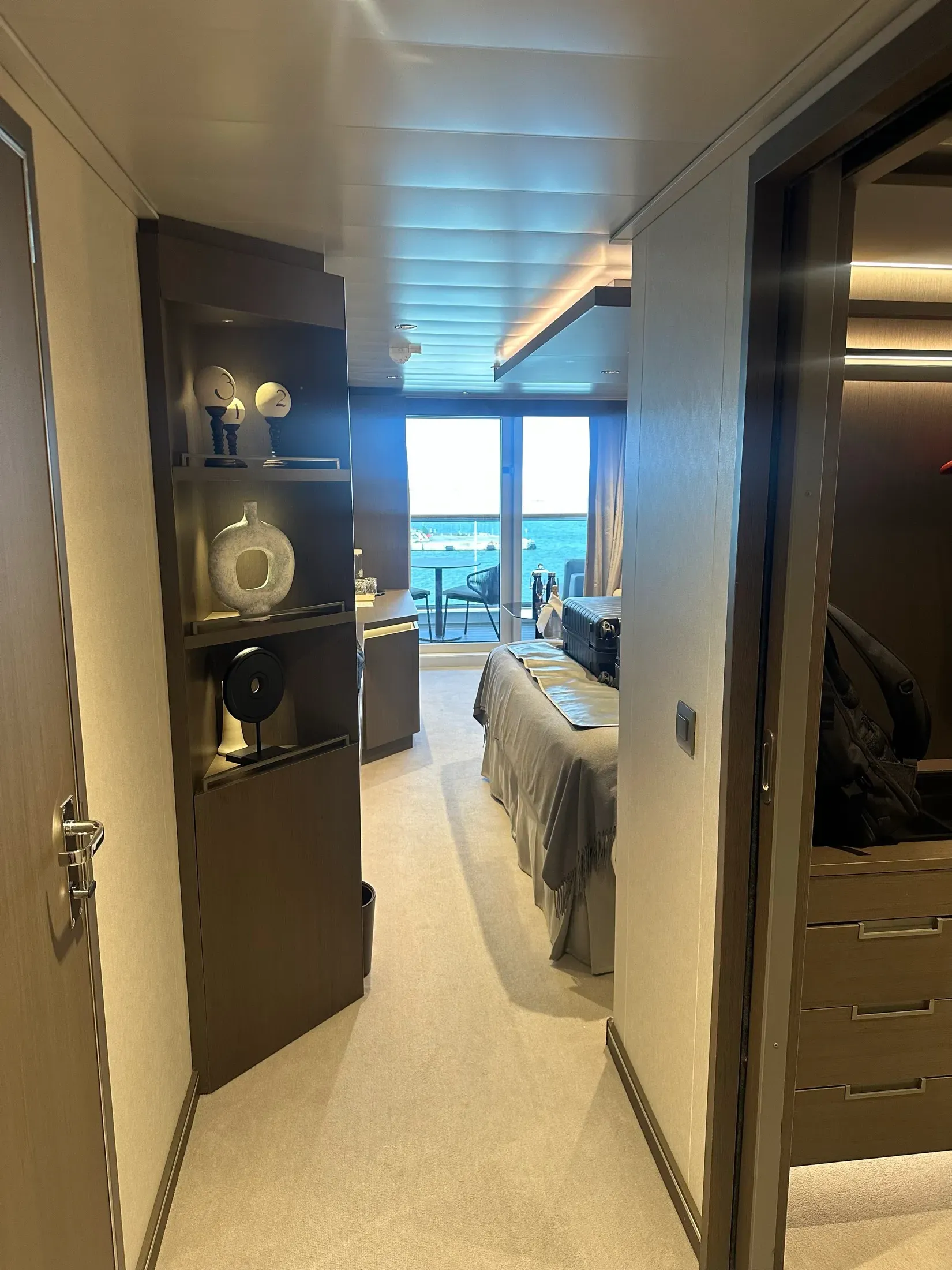
The honest note on suites: a few categories are quietly oversold for their tier, and one or two are the value picks most buyers walk past. I will not relitigate the whole table here. Tell me your voyage and I will tell you which suite, and the 14-suite breakdown (/suites/compare/) shows the per-night math behind the recommendation. If you are also weighing which ship, the newer Explora III against Explora II carries a deeper Penthouse mix and a few rooms the earlier hulls do not, and I lay out who that is worth waiting for.
The connectivity holds up too, which matters if you do not get to fully unplug. Wi-Fi is ship-wide Starlink, in the fare rather than a daily add-on, and it held a full working day on my sailing rather than dropping the moment I left the suite. For the exec who will not promise their team a real disconnect, that is one less thing to be anxious about.
What about kids and a multi-generational group?
It works well for a multi-generational group that skews adult, and carefully for younger families. Children were aboard my sailing, including babies, so it is not adults-only. The Nautilus kids’ club is small but well-appointed: video games and gear at the level of a really good home game room, not a mass-market arcade with waterslides. With one pool and gentle discouragement of splashing, a child gives up a little here compared with a bigger line. For a few young ones inside an otherwise adult group, it works very well. For a trip built around the kids, the family read (/guides/multi-generational-luxury-cruises/) is the one to weigh before you book.
Questions people ask
Is Explora Journeys worth it? Yes for the hotel-luxury traveler who wants design, space, and a generous staff ratio at the lowest headline fare in the tier; weigh it carefully if you want big-ship entertainment or excursions bundled into the price.
Is Explora Journeys a good cruise line? It is one of the strongest new entries in luxury cruising, with all-suite all-oceanfront accommodation, eight of nine restaurants included, and a crew-to-guest ratio among the most generous in the category; the honest caveat is that it launched in 2023 and is still building the muscle memory a thirty-year-old line has.
Is Explora Journeys luxury or ultra-luxury? Explora positions itself as ultra-luxury and prices alongside Silversea and Seabourn; in practice it reads as premium edging toward ultra-luxury, since the design, space, and dining clear the bar while the service depth is still maturing.
Is Explora Journeys better than Silversea? They are the closest rivals on spec, and it comes down to fit. Silversea is more polished after three decades and stronger on late-night energy and bundled excursions; Explora is more contemporary in design, has larger entry suites at 377 sq ft, and usually carries the lower per-night fare. I book both. The side-by-side (/vs/silversea/) names where each one wins.
Is Explora Journeys all-inclusive? Onboard, yes, and genuinely: dining across the eight included venues, drinks and fine wines, specialty coffee, gratuities, and ship-wide Starlink Wi-Fi are all in the fare. What is not: shore excursions, air, and a couple of upcharge venues. The full ledger is here (/inclusions/).
Is Explora Journeys good for families and kids? It works well for a multi-generational group that skews adult, and children were aboard my sailing, including babies; the caveat is one pool and a small kids’ club (a well-appointed game room, not a mass-market arcade), so a family wanting kids’ programming should weigh it carefully.
So, is it worth it?
For most of the hotel-luxury people I work with who swore off cruising, yes, almost always. For a few specific wants, late-night energy, total privacy, or every excursion folded into one number, it will not be, and I will say so plainly and point you to the better ship. I book Silversea, Seabourn, Regent, Ritz-Carlton, and Viking too, and that honest no is the whole reason the yes is worth anything, which is also what changes when you book through an advisor (/why-book-through-me/).
If you are weighing it, send me your dates and the suite tier you are considering. I will have live pricing in your inbox within two hours, no call required. Or read the structured verdict next: my full first-hand review, with the rating (/guides/explora-journeys-review/). If you want one more first-hand read first, here is what surprised me most about Explora (/journal/what-surprised-me-most-about-explora/).
— Justin