Shore excursions are the one thing an Explora fare doesn’t include. Explora Journeys excursions are not folded into your fare; they are billed per person on top of it, booked through the onboard concierge or in advance, and run under four labels: Destination Essentials, Overland Immersions, a small-capped specialty tier, and Private Arrangements. After sailing Explora I across the Mediterranean and the Greek isles, embarked in Venice, here is the rule I give every client: book the ship’s tour where logistics are the hard part (a long transfer, a timed entry, a tender port with a tight back-aboard window), and book your own where the port is walkable. The honest catch comes later in this post.
So no, none of it is included, on any fare. The one exception is the occasional promotion, when a fare or campaign folds in a Destination Experience or onboard credit you can put toward one. Absent that, you’re paying per person, per tour. There were ports on my own sailings I would have skipped entirely, and a couple I was glad I got off for. The whole value of an advisor here is being willing to tell you which is which before you pay.
What does Explora actually charge for ashore?
Nothing is included, on any fare. That is worth saying plainly because the line is genuinely all-inclusive onboard (dining, drinks, ship-wide Starlink Wi-Fi), so buyers reasonably assume the same generosity carries ashore. It does not. The full line-by-line of what an Explora fare does and doesn’t cover lives on the inclusions page, and the short version is this: among the major luxury lines, Regent Seven Seas is the only one that bundles shore excursions into the base fare. Everyone else, Explora included, sells them à la carte.
Explora groups its excursions under four labels:
- Destination Essentials. The must-do in a given port. The default, the most coach-prone.
- Overland Immersions. Longer, all-inclusive culture trips, sometimes multi-day.
- A small-capped specialty tier. Limited-access experiences capped at a handful of guests. Group size is the whole game here, so verify the cap before you book.
- Private Arrangements. A guide and vehicle for your party only, offered in select ports.
Pricing is set per tour by length, transport, group size, activity level, and exclusivity, and listed on each tour’s page. Two practical notes from the booking mechanics: pre-journey pricing is often lower than booking the same tour onboard, so the planning-ahead reflex pays off here. And most experiences run 3-7 hours, with full-day options up to roughly ten depending on how long the ship sits in port. I will not quote a dollar figure for any specific tour, because they move and they vary by sailing. The right number for your voyage is something I pull live.
So are Explora’s excursions worth it?
Some are and some aren’t, and the answer depends on the port, not the line. That is the honest verdict, and it is the thing the brand cannot tell you (it sells every tour) and the review blogs mostly don’t (they describe the day, they don’t decide it for you). The recurring knock in reviews is real: a chorus of “uninspired,” “panoramic,” “overpriced,” and a steady “we just booked our own next time.” There is also a fair counter-chorus: “punctual,” “informative,” “the guide was excellent.” Both are true, because excursion quality is a per-tour, per-operator question, not a brand grade.
So the framing I use is one rule, applied port by port. Where the day is logistically hard, the ship’s tour earns its premium. Where the port hands you a walkable old town or a sight ten minutes from the pier, you almost always do better, and spend less, on your own. The two sections below are that rule in practice.
When does the ship’s tour earn its premium?
Three situations, and they are all about logistics rather than the sight itself.
The long inland transfer. When the thing you came to see sits an hour or more from the pier, a coach you don’t have to arrange, with a guide and a guaranteed seat back, starts to look like good value, especially if the alternative is negotiating a taxi in a language you don’t read. The convenience is the product.
The timed or limited entry. Some sites run on reserved tickets, fixed windows, or capped access. The ship’s tour holds the slot for you. Trying to replicate that on your own, from a port with a few hours, is how a morning evaporates in a ticket line.
The tender port with a tight window. A tender is the small boat that ferries guests ashore when the ship anchors offshore rather than tying up at a berth, and it changes the math. On Santorini, where Explora anchors in the caldera and everyone goes ashore by tender, the call was short and the last tender back left well before sail-away. Here is the part that matters: the ship will wait for its own delayed excursion. It will not wait for you. Miss that last tender because your independent taxi sat in traffic on the switchbacks up to Fira, and you are arranging your own way to the next port. Book the ship’s tour in a tender port with a short call and you have bought the one thing money should buy in travel, which is not having to worry. Whether a given port is a tender port or an alongside berth, and the exact last-tender time, varies by ship, itinerary, and even the day’s weather, so confirm it for your specific sailing before you decide.
For a multi-generational group with an older relative who tires in a queue, the guaranteed seat and the handled return are worth more than the line item suggests. I learned that the practical way, traveling with three generations aboard.
When should you book your own instead?
The flip side is the larger half. In a walkable port, the ship’s tour is paying a premium for something the port gives you for free.
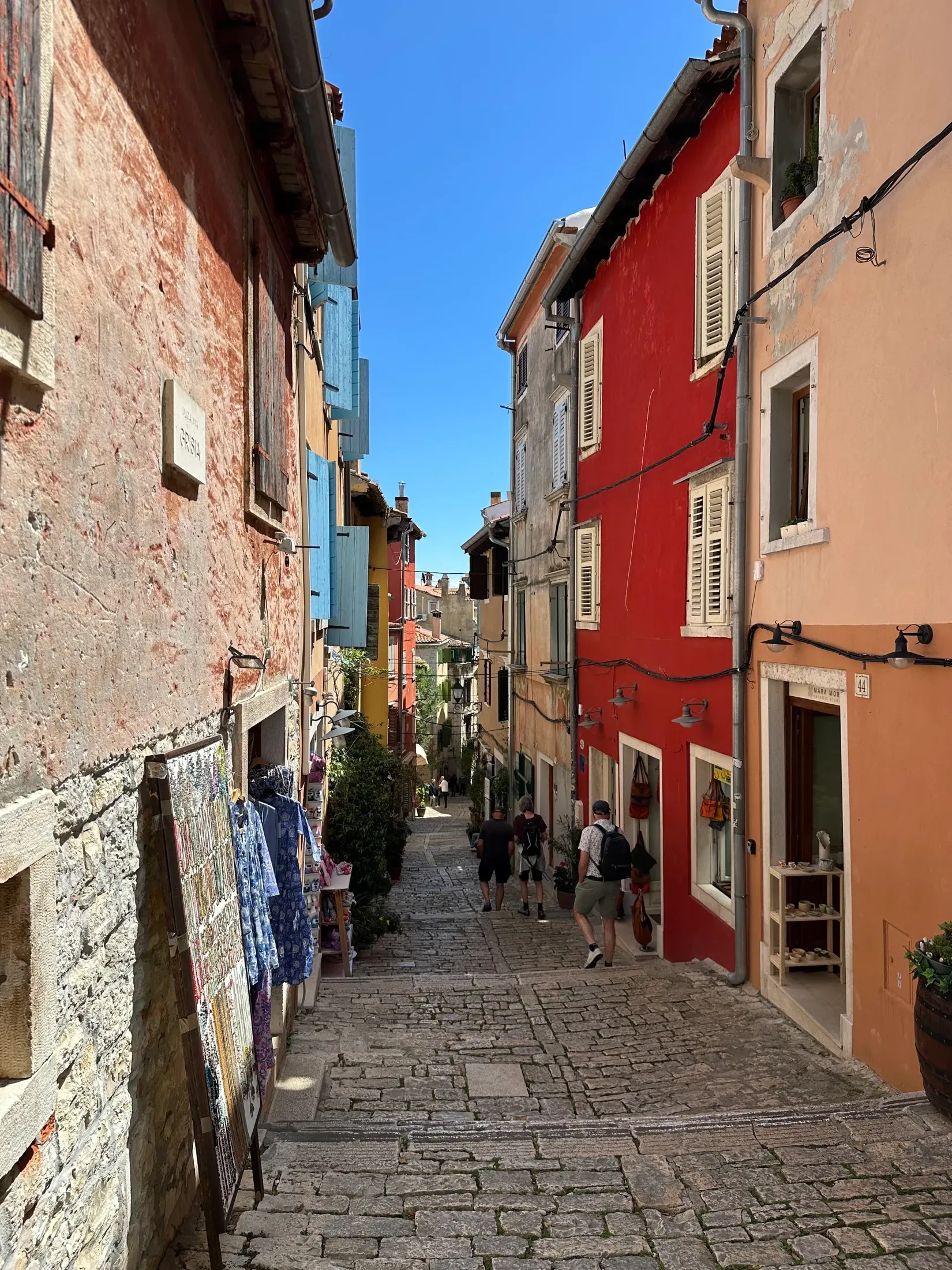
The walkable old town. Terracotta rooftops, a harbor town you can cover on foot in a morning, a waterfront you’d want to wander at your own pace anyway. A coach tour of a place you could simply walk is the clearest case for skipping the ship’s offering. Go off on your own, get lost on purpose, be back well before the all-aboard.
The private half-day driver. For two or more travelers, a licensed private guide and car for a half-day frequently costs less than the per-person ship tour, and you set the pace and the stops. On Crete, out of the port at Heraklion, I hired my own guide and car for the morning rather than take the coach to Knossos, and for our small party it came in under the per-person ship tour with the run of the day on top. In a few ports Explora’s Private Arrangements do the same thing through the ship, which is the convenient version of the same idea. Either way, a small group almost always does better than a fixed-departure coach. Treat any specific port price as a verify-before-booking number, because guide rates move.
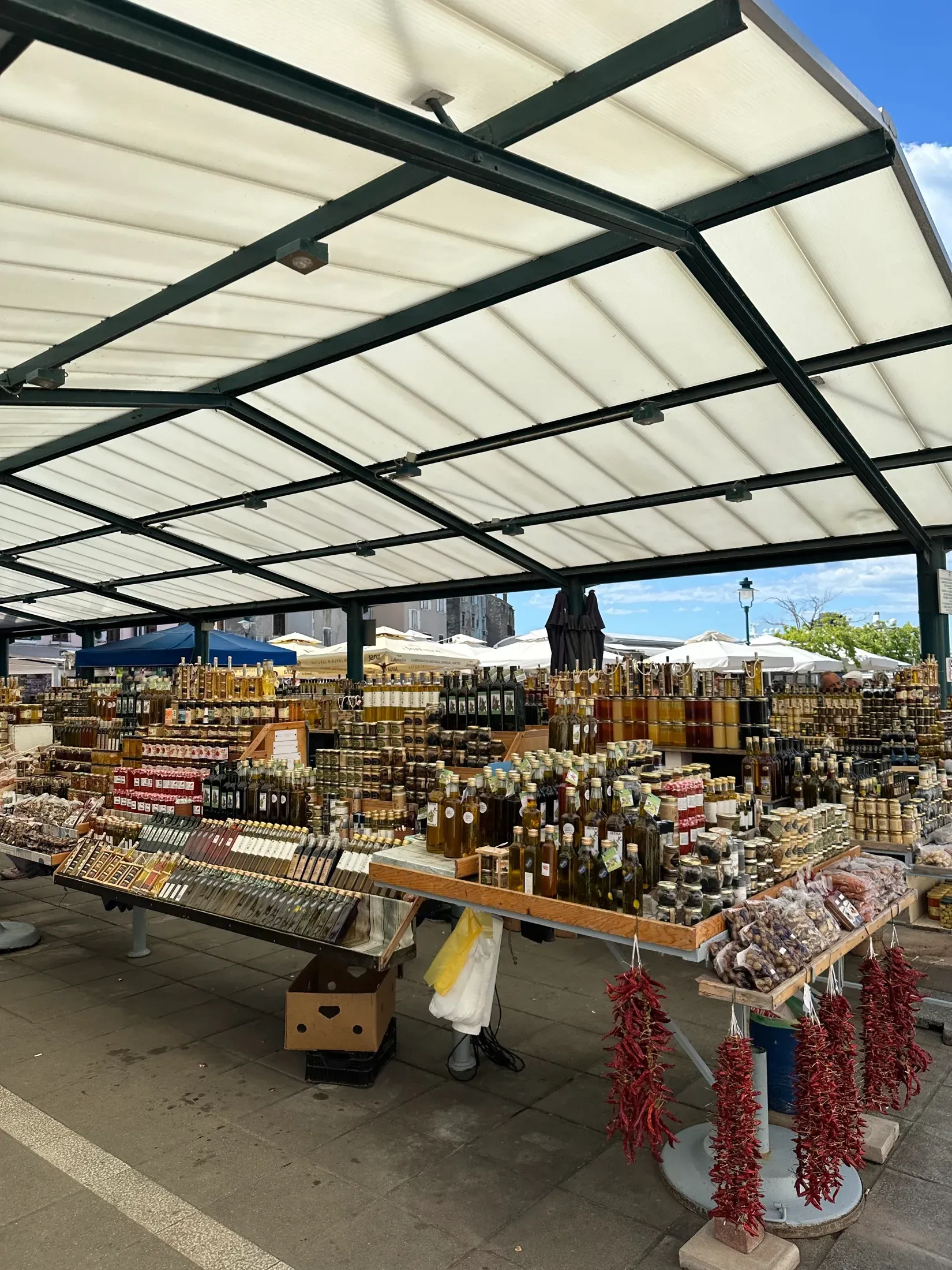
The market morning. The thing no fixed itinerary will ever give you. One of my best mornings ashore was an open-air market: olive oil, jarred honey, dried chiles strung at a stall, the slow business of a port town doing its own shopping. You don’t book that. You walk into it. It is the exact texture of a place that a panoramic bus drives past on the way to the photo stop.
The Greek isles reward this approach especially. I sailed the Aegean from Venice, and the islands are made for the self-directed half-day: a town on foot, a taxi to one good thing, back aboard for the sail-away. You can browse the actual itineraries and their ports to see which of your stops are the walkable kind, and if you are weighing the season, the Mediterranean’s quiet five-month stretch is its own decision.
Does Explora really run “no big bus tours”?
Mostly, but not always, and this is the honest catch I promised. Explora markets itself against exactly the thing a lot of cruise excursions are: forty people on a coach, headsets crackling, a guide counting heads at every stop. The brand’s whole shore pitch leans on being the opposite of that. And then AFAR, reviewing the line, documented a panoramic bus tour with audio headsets in Bruges, run by a third-party coach operator. The thing the brand sells against, sold under the brand’s label.
I did not sail Northern Europe and I was not on that tour, so I am citing AFAR’s reporting, not my own deck. But the gap it found is real and it is the single most useful thing to know before you book a Destination Experience: some of them are third-party coach tours wearing the house livery. The fix is not cynicism. It is reading the listing. Two tells before you pay: the word “panoramic” is travel-industry for “you will see it through a bus window” (the one euphemism worth memorizing), and a long duration in a small port usually means a long drive padding a short sight. Read the operator, read the duration, and the occasional coach tour stops being a surprise.
Which ports would I have skipped, and why I tell clients that?
This is the part that separates an advisor from a brochure. On my own sailings, there were shore destinations I would have skipped, and a couple I’d have skipped getting off for at all. Not every port earns a paid tour. Some barely earn the walk down the gangway. The line will never tell you that, because every port is a sales opportunity for it. I will, because telling you which port to skip is the only thing you’re paying me for that the brochure can’t do.
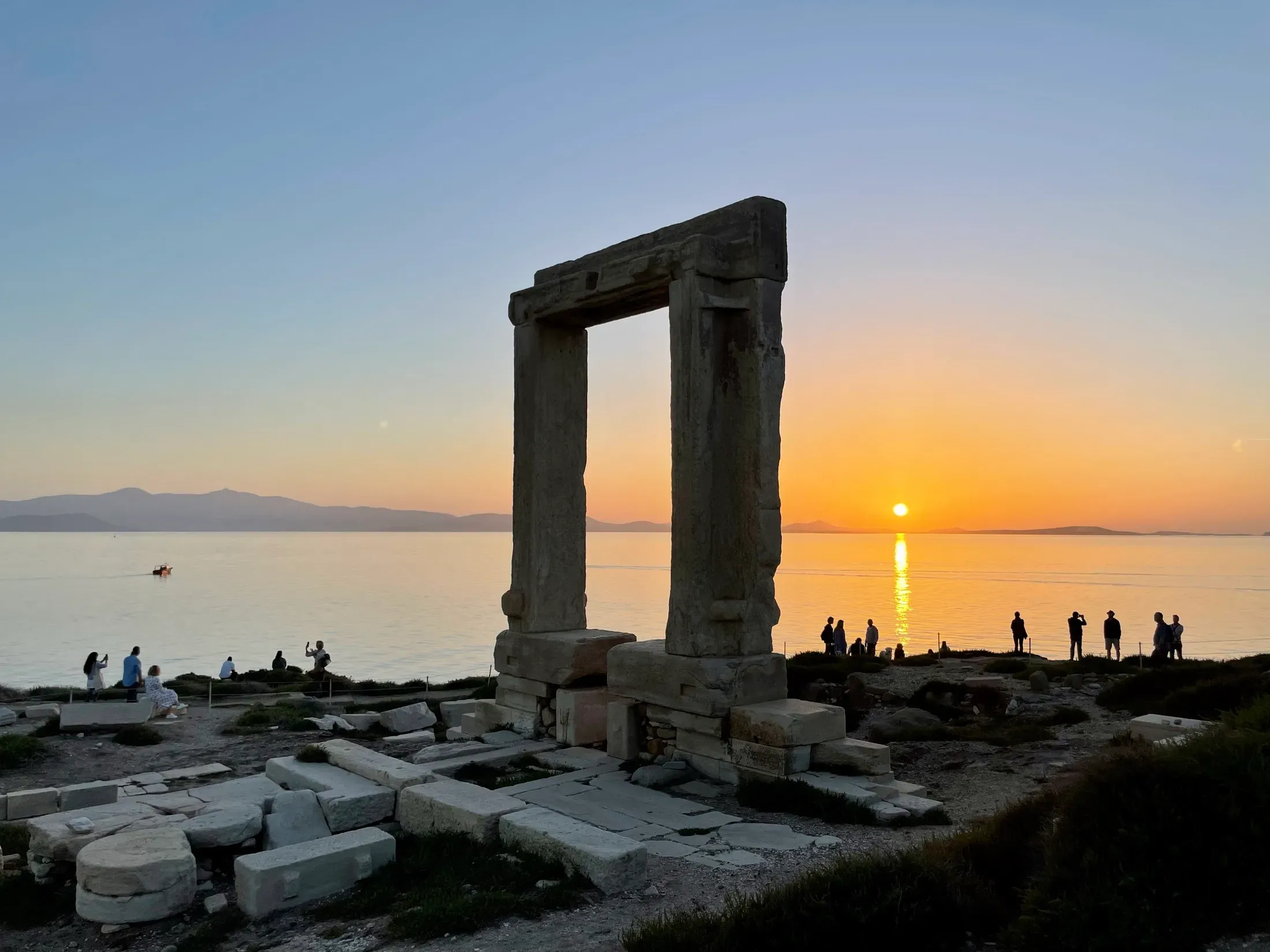
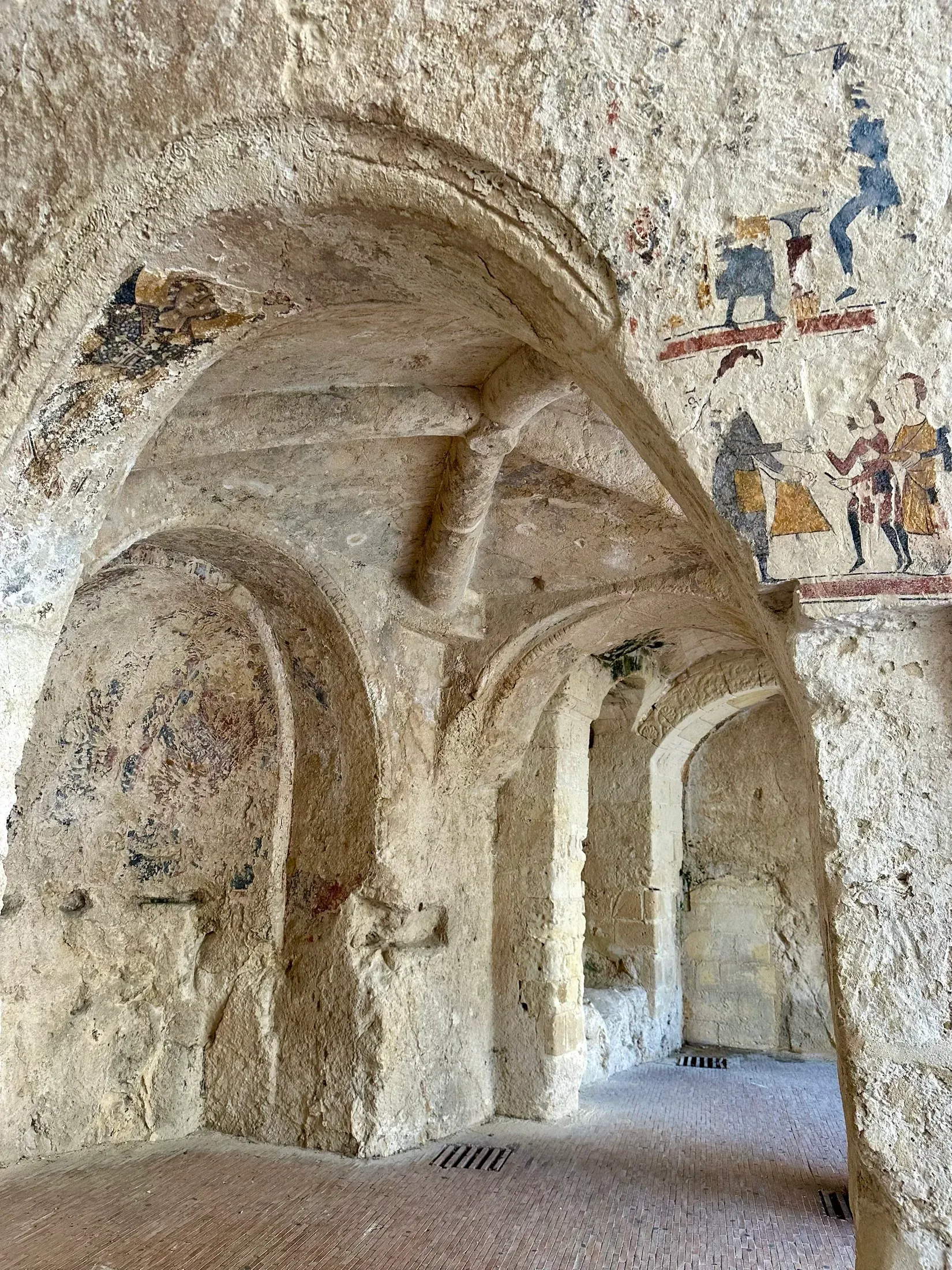
And the inverse is the better half of the job: a frescoed rock-cut church on one shore day, reached on a tour I’d recommend to anyone, was the kind of stop that justified the whole excursion line. The Portara above Naxos at sunset. A market morning that cost nothing and beat every coach on the manifest. Worth-it and skip-it sit on the same itinerary, and telling them apart for your specific voyage is the work. For the overall verdict on whether Explora is worth it, that’s the hub piece; this one is just the ports. And if you want the broader read on what it was actually like aboard Explora I, that’s the companion.
So, theirs or your own?
Theirs when the logistics are hard. Yours when the port is walkable or a private half-day beats the coach. Read the operator before you pay, especially when you see the word “panoramic.” And on the few ports that aren’t worth a paid tour at all, the honest move is to say so, which the brand can’t and I will. If you’d rather have all of this decided for your actual voyage rather than worked out in the abstract, that is exactly the thing to hand an advisor, and what changes when you book Explora through one is its own page.
Send me your voyage and the ports on it. I’ll tell you which excursions are worth Explora’s price, which to do on your own, and which to skip, with live pricing in your inbox within 24 hours, no call required.
Questions people ask
Are shore excursions included on Explora Journeys? No. Shore excursions are extra on every Explora fare, billed per person and booked through the onboard concierge or in advance, and Regent Seven Seas is the only major luxury line that bundles them into the base fare.
Are excursions ever included on Explora cruises? As a rule, no. Shore excursions are extra on every Explora fare, billed per person. The exception is the occasional promotion, when a fare or campaign may bundle a Destination Experience or onboard credit you can apply toward excursions, so it’s worth asking what’s attached to a specific sailing before you book.
How much do Explora Journeys excursions cost? Explora prices each Destination Experience individually by length, transport, group size, and exclusivity, lists the price on each tour’s description, and pre-journey pricing is often lower than booking the same tour onboard.
Are Explora excursions worth it? Some are and some aren’t: the ship’s tour earns its premium when logistics are hard (a long transfer, a timed entry, a tender port with a tight back-aboard window), and you usually do better on your own in a walkable port or with a half-day private driver.
Does Explora really run “no big bus tours”? Mostly, but not always, because some Destination Experiences are run by third-party coach operators, and AFAR documented a panoramic bus tour with audio headsets in Bruges, so read the operator and the duration before you book.
Should I book Explora’s excursion or arrange my own? Book Explora’s when the day is logistically complex or back-aboard timing is tight, and arrange your own private guide or self-tour when the port is walkable or a private half-day costs less than the per-person ship tour for two or more travelers.
Can you cancel an Explora shore excursion? Excursions booked in advance can usually be changed or cancelled up to a cutoff before the sailing, after which onboard cancellation rules apply, so confirm the exact window for your specific excursion at the time you book.
— Justin