Explora I does not run on LNG. Neither does Explora II. Both burn marine gas oil, a refined diesel, through four Wärtsilä engines, with exhaust scrubbed for nitrogen oxides. LNG, the fuel that gets the press, starts at Explora III. If you have read a headline calling the fleet “LNG-powered,” it was either early or wrong. The honest version is more interesting. Which ship runs what, what each system actually does, and where the green story is real versus where it is a bridge to something cleaner that does not yet exist at scale.
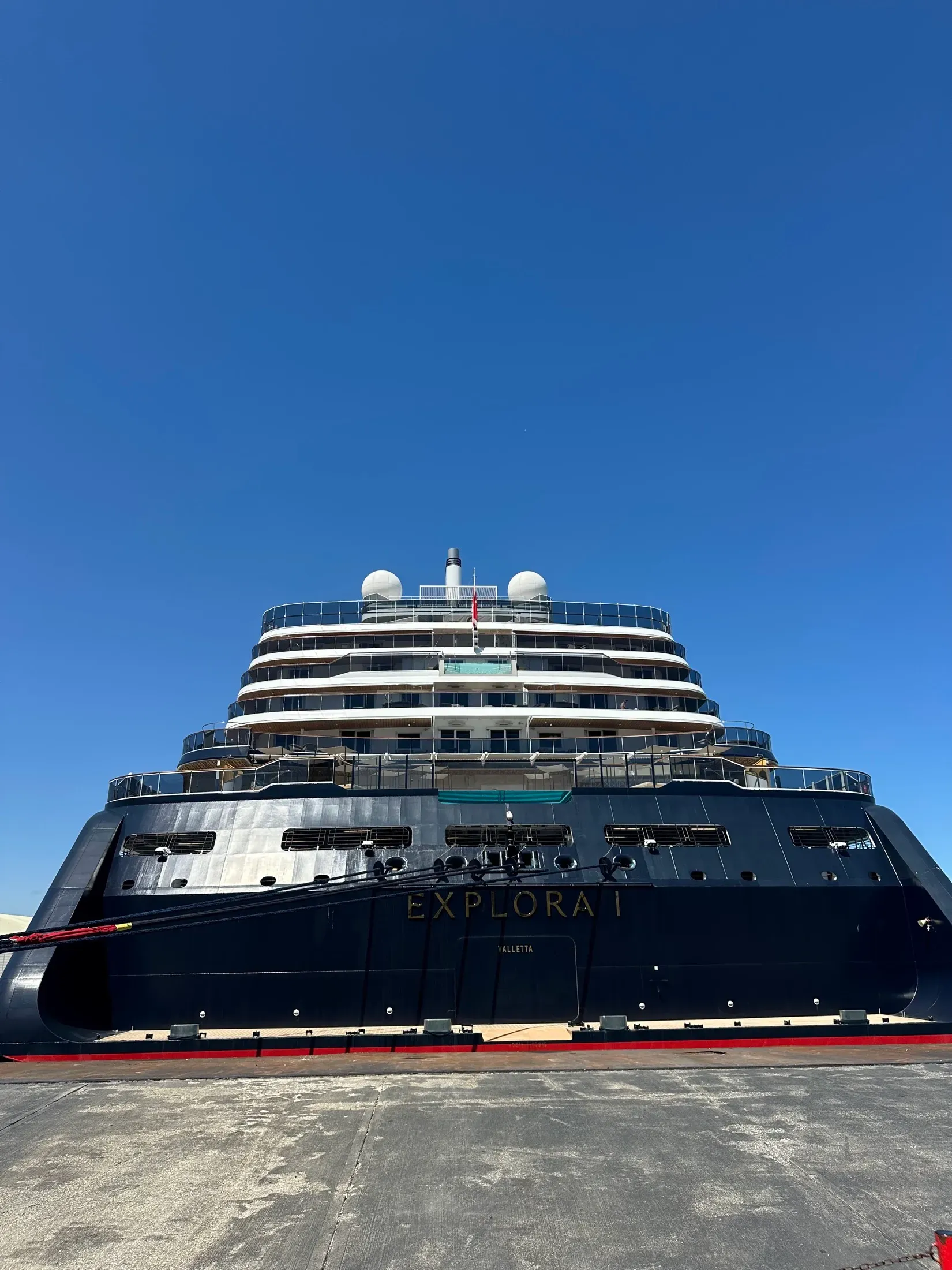
I have sailed Explora I, multiple times, across the Med and the Greek islands, embarking in Venice. So I can tell you what some of this feels like as a passenger. I have not sailed II, III, or IV, so everything I say about LNG and the coming hydrogen ships is documentary: spec sheets, the shipyard, Explora’s own filings, the maritime trade press. I keep those two lanes separate. On a topic this easy to overstate, the line between what I saw and what I read matters.
So which Explora ships run on LNG?
Explora III and beyond. Explora’s own sustainability page states it plainly: “EXPLORA III and beyond are powered by LNG.” Explora III is the first LNG-powered ship in the fleet: delivered on July 23, 2026, named at MSC’s Barcelona terminal on August 1, and out on her maiden Barcelona-to-Lisbon voyage from August 3. Explora IV and V follow in 2027, Explora VI in 2028, all LNG-capable.
Explora I and II are the diesel ships. That is not a knock. It is just the fleet’s reality, and any account that blurs it is selling you something. You can line the two generations up on the ship comparison, and the engine difference is the cleanest dividing line between them.
LNG is liquefied natural gas, methane chilled to a liquid so a ship can carry enough of it to be useful. Burned in a marine engine instead of conventional fuel oil, it changes the emissions picture, mostly for the better and partly in ways that get oversold. More on that below, because that is exactly where the greenwashing risk lives.
What do Explora I and II actually run on?
Explora I uses four Wärtsilä 8L46F diesel engines, 9,600 kW each, for roughly 38.4 megawatts total, driving two 10-megawatt shaft lines. The fuel is marine gas oil. That spec comes from Riviera Maritime Media’s technical writeup of the ship, a maritime-trade source, not a brochure. Explora II uses the same four-engine arrangement. I will be honest about confidence here: the Explora I engine model is well documented, and Explora II is sister-ship parity rather than a single confirmed spec page, so I am inferring II from I. You can read more on each hull at Explora I and Explora II.
The thing that makes these diesel ships defensible is what sits downstream of the engines.
What does SCR do, and why does it matter on the diesel ships?
All six ships, the diesels included, use selective catalytic reduction. SCR injects a urea-based reductant into the hot exhaust stream over a catalyst, which converts nitrogen oxides into ordinary nitrogen and water. Each of Explora I’s four engines carries its own SCR system. Explora puts the figure at a 90% reduction in NOx emissions.
The operator read is simple. SCR treats NOx and only NOx. Nitrogen oxides are the gases behind smog and acid rain and a real local air-quality problem near ports and coastlines. SCR does nothing for CO2 and nothing for sulfur. It is a genuine, meaningful piece of kit for the air people actually breathe in a harbor. It is not a climate solution. Both things are true at once, and a clear-eyed reader should keep them separate.
So the fair summary of Explora I and II: a clean-burning diesel with aggressive NOx after-treatment. Not the future of marine propulsion, but a long way from a smokestack.
What is shore power, and does it actually get used?
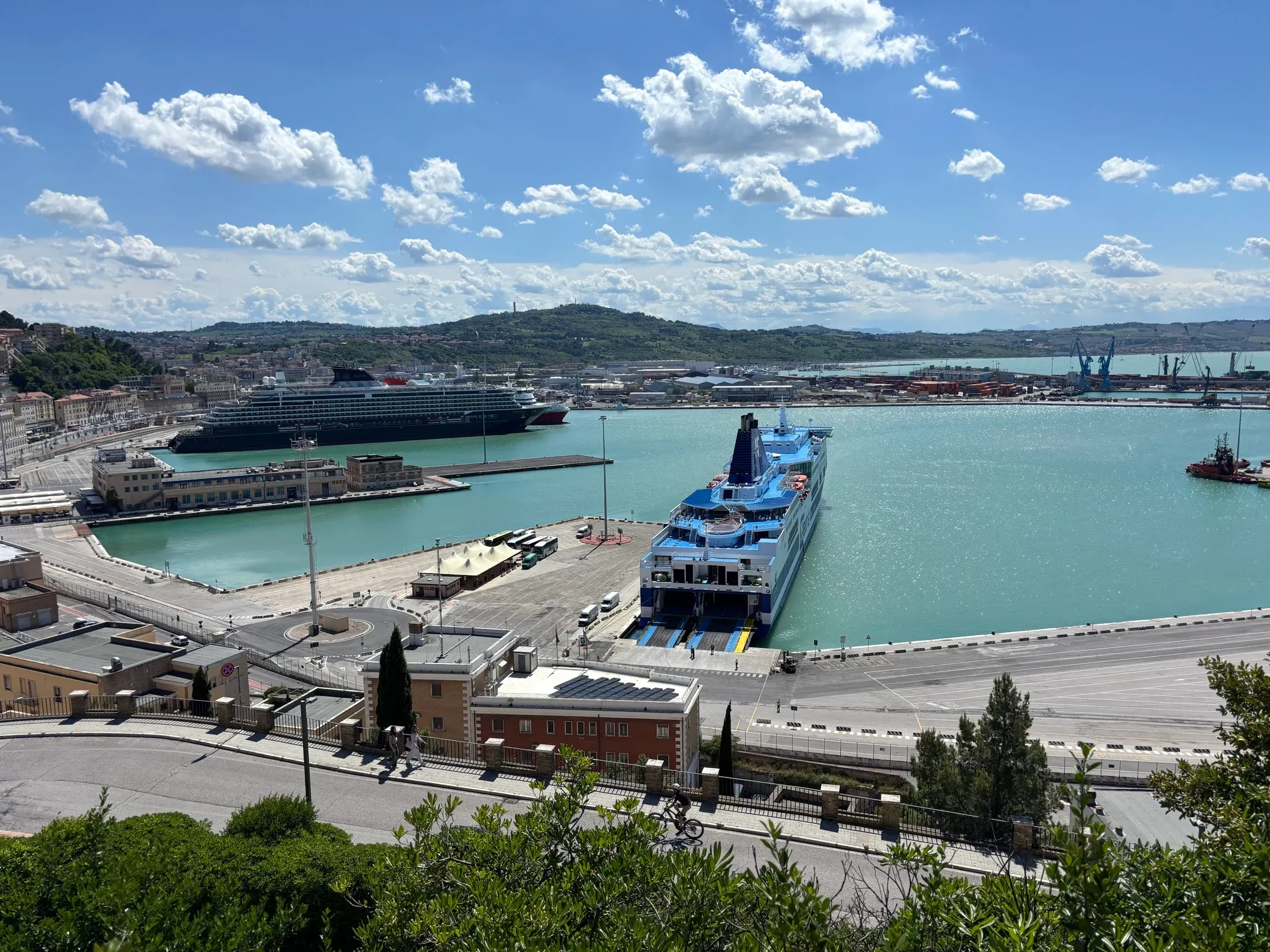
Explora I and II are built for shore-to-ship power, sometimes called cold ironing. The principle is simple: when the ship is at the dock, it plugs into the local electrical grid and shuts its engines down, so it is not idling on fuel to keep the lights, kitchens, and air handling running. All six ships are slated to have shore-power connectivity.
Here is the catch the marketing tends to skip. Shore power only does anything if the port supplies it. A great many ports, including some on popular Mediterranean routes, still have no high-voltage shore connection at the berths a cruise ship uses. A capable ship sitting at an incapable dock burns fuel like any other. So I file shore power as a real and valuable capability, not a guaranteed daily benefit. At a port that supports it, it matters a lot. At one that does not, the spec sheet and reality diverge. That is not Explora’s fault, but it is worth knowing before you read “shore power” as “zero emissions in port.”
This is the sort of gap I spend my time on with clients. The brochure lists the capability. The question is what your specific itinerary’s ports can actually deliver, and that is a different conversation. If you want the bigger picture of how Explora fits a luxury traveler, I went deep on that in is Explora Journeys worth it.
What about wastewater, ballast water, and the rest?
A few systems run across the whole fleet, and they hold up well.
Explora cites a Baltic-standard advanced wastewater treatment system. The Baltic Standard is IMO resolution MEPC 227(64), the most stringent sewage-effluent rule the International Maritime Organization has issued, so the bar it references is a real and demanding one. The treatment cleans onboard wastewater to a high quality before discharge. I will name the standard, which is verifiable, and stop there rather than dress it up beyond what Explora documents.
Ballast water gets a US Coast Guard-approved treatment system compliant with the IMO Ballast Water Management Convention. Ballast is the water a ship takes on for stability, and untreated it is one of the main vectors for moving invasive species between ecosystems. Treating it is unglamorous and genuinely important.
All six ships are RINA Dolphin-certified for reduced underwater-radiated noise, meaning the hull and engine-room design are built to limit the acoustic footprint on marine mammals. As someone who has spent a lot of time in the water, I have a soft spot for this one. Ship noise is an under-discussed stressor for cetaceans, and designing against it is the kind of thing that does not show up in any guest-facing way but is the right call.
One clarification I want to make carefully, because it would be easy to fudge. Explora I is a quiet ship to be aboard. I noticed it. But cabin quiet is not the same thing as underwater-radiated noise, and I am not going to pretend my experience of a calm suite is evidence of the Dolphin certification. Those are two different physical phenomena. The quiet I felt is real; the certification is documentary; I am not welding them together.
Is Explora I a hybrid? What about the hydrogen ships?
No, Explora I is not a hybrid, and this is where a lot of bad information lives. The fleet’s design “incorporates provision for battery storage allowing future hybrid power generation.” Read that carefully: it is provision-for language. The ships are built so batteries could be added later. They are not battery-hybrid ships today. If you see Explora I described as a fuel-cell or hybrid vessel, someone has confused it with the future ships. I tripped over exactly this conflation while researching, where one source wrongly grafted a hydrogen fuel-cell system onto Explora I. It is false.
The actual hydrogen story is real, and it is Explora V and VI. Those two get a new generation of LNG engines plus a containment system for liquid hydrogen and a 6-megawatt hydrogen fuel cell that produces what Explora calls emissions-free power for the hotel operation, meaning the ship could sit in port with its engines off and run its hotel load on hydrogen. That is the genuinely forward-looking part of the program. Explora V is scheduled for 2027 and VI for 2028. I have seen further figures floated for tank temperatures and capacities, but they did not hold up to verification, so I am leaving them out rather than repeat a number I cannot stand behind.
Explora III, by contrast, is the LNG ship now sailing: roughly 72,800 GT, 463 suites, and built ready to run bio-LNG and renewable synthetic LNG once those fuels exist at scale. If you want the ship-level detail, I keep a page on Explora III, the launch analysis explains what changed for booking, and you can set it against its diesel sister on the III versus II breakdown.
Is LNG actually better for the environment?
This is the section that earns the rest. Compared with heavy fuel oil or marine gas oil, LNG combustion is roughly 20 to 25% lower in CO2, very close to 99 to 100% lower in sulfur oxides, around 98% lower in particulates, and 85 to 90% lower in NOx. Those are big, real reductions in local pollutants. The CO2 figure varies by engine, load, and source, so treat it as a range and not a precise promise; MSC and Fincantieri cite “up to 25%,” and independent bodies land in a similar band.
Now the counterpoint that keeps this honest: methane slip. A small fraction of the natural gas passes through a marine engine unburned and goes out the exhaust as methane. Methane is a far more potent greenhouse gas than CO2 in the near term, with a global-warming potential the IPCC puts at roughly 28 to 34 times CO2 over a hundred years and considerably higher over twenty. That slip partially offsets LNG’s CO2 advantage. How much depends on the engine technology and how it is run.
So here is the operator’s verdict, stated plainly. LNG is a substantial step down on the pollutants that wreck local air quality near ports: sulfur, particulates, NOx. On climate, it is a modest improvement at best and a contested one once methane slip is in the accounting. It is a transitional fuel, a bridge, and Explora frames it exactly that way by building the ships to accept bio-LNG and synthetic LNG later. That framing is the responsible one. LNG is real progress on some axes and a hedge on the hardest one, and anyone selling it as a green halo is overselling.
A few smaller, verifiable items round it out. Single-use plastics are not used onboard, by Explora’s account, nor offered during land experiences. I can confirm I did not run into them on Explora I. The ships use LED lighting, high-efficiency appliances, smart HVAC with energy-recovery loops, and optimized hull and anti-fouling design to cut drag and fuel burn. None of those is dramatic on its own. Together they are the unglamorous engineering that adds up.
Where does this leave a traveler deciding?
If environmental performance is part of your decision, here is how I would weight it. Explora’s whole-fleet systems are strong and verifiable: SCR for NOx, the Baltic-standard wastewater treatment, ballast treatment, the underwater-noise certification, no single-use plastics. Those apply whether you sail the diesel ships or the LNG ones. The fuel difference is real but narrower than the headlines suggest. LNG on Explora III and up is a meaningful win for harbor air and a modest, debated one for carbon. The hydrogen fuel cell on V and VI is the genuinely new chapter, and it arrives in 2027 and 2028.
What I would not do is pick Explora I over III, or vice versa, on environmental grounds alone, until you have weighed the rest of the experience, because the ships differ in more than their engines. The greener fuel is one input among many, and an honest advisor should not let a single spec drive a five-figure decision. If you want my broader take on the line, the overview of Explora Journeys lays out where I think it fits.
The short version, which is the version I trust: Explora I and II are clean diesels with serious NOx after-treatment and real shore-power capability where ports cooperate. LNG starts at III and is a true step down on local pollution and a careful, hedged step on climate. Hydrogen comes with V and VI. That is the accurate picture, no halo attached, and it is more impressive for being told straight.
Questions people ask
Does Explora Journeys run on LNG? Only some of the ships. Explora III and the ships after it (IV, V, VI) are LNG-powered or LNG-capable. Explora I and Explora II run on marine gas oil, a refined diesel, with selective catalytic reduction to cut nitrogen oxide emissions by about 90%. Explora’s own sustainability materials state that “EXPLORA III and beyond are powered by LNG,” so any blanket claim that the whole fleet runs on LNG is inaccurate.
Is LNG actually better for the environment? Partly, and it depends what you measure. Compared with conventional marine fuel oil, LNG cuts sulfur oxides by close to 99%, particulates by around 98%, nitrogen oxides by 85 to 90%, and CO2 by roughly 20 to 25%. Those are large reductions in the pollutants that harm local air quality near ports. On climate the picture is more complicated, because a small amount of unburned methane escapes in the exhaust, and methane is a much stronger greenhouse gas than CO2 in the near term. That methane slip partially offsets the CO2 benefit, which is why LNG is best understood as a transitional fuel rather than a clean one.
What is shore power and does Explora use it? Shore power, also called cold ironing, lets a ship plug into the local electrical grid at the dock and shut down its engines so it is not burning fuel while berthed. Explora I and II are built for it, and all six ships are slated to have the capability. The catch is that shore power only works where the port itself supplies a high-voltage connection, and many cruise ports still do not. So it is a real capability that delivers real benefits at equipped ports, but it is not something that happens automatically at every stop.
What is SCR on Explora ships? SCR stands for selective catalytic reduction. It injects a urea-based reductant into the engine’s hot exhaust over a catalyst, which converts nitrogen oxides into harmless nitrogen and water. All six Explora ships use it, and Explora reports it cuts NOx emissions by 90%. It is important to understand its limits: SCR treats nitrogen oxides only. It does nothing for carbon dioxide or sulfur, so it improves local air quality without being a climate measure.
Are the Explora ships hybrid or hydrogen-powered? Not currently. The fleet’s design includes provision for future battery storage, meaning batteries could be added later, but Explora I and II are not battery-hybrid ships today. The genuine hydrogen technology arrives with Explora V and VI, scheduled for 2027 and 2028, which are designed with a 6-megawatt hydrogen fuel cell that can power the ship’s hotel operation with engines off in port. Any claim that Explora I is a fuel-cell or hybrid ship is a mix-up with those future vessels.
How does Explora treat its wastewater? Explora cites a Baltic-standard advanced wastewater treatment system. The Baltic Standard is IMO resolution MEPC 227(64), the most stringent sewage-effluent rule the International Maritime Organization has set, so the system treats onboard wastewater to a high quality before discharge. The ships also carry US Coast Guard-approved ballast water treatment to prevent the spread of invasive species, and all six are certified for reduced underwater-radiated noise to limit their acoustic impact on marine life.
— Justin